
How to Check for a Warrant in Ord
Ord makes its city contacts easy to reach, yet the Ord Police Department site posts no warrant search or active roster. Pull the citation or ordinance record first. County Court holds the formal case after that.
- Ask the Ord City Clerk or Bureau of Violations whether the citation was referred.
- Call Ord Police at (308) 728-5991 for an office or records question, or dispatch at (308) 728-5771 for immediate police routing.
- Call Valley County Court at (308) 728-3831 for case, FTA, payment, or warrant status.
- Call the Sheriff at (308) 728-3906 for service, custody, or surrender questions.
The Ord Police Department and Municipal Court
Ord Police can hand you the paper trail, but it keeps no municipal-warrant database. A Bureau of Violations sits inside the City Clerk's office for certain nonmoving traffic citations. That is where the first record lives. Nebraska Judicial Branch materials place municipal-ordinance cases in County Court. So the city may hold the ticket while the court holds the formal order.
Ord Police Department
205 S. 17th Street, Ord, NE 68862
Office (308) 728-5991 · Dispatch (308) 728-5771
Types of Ord Warrants
An Ord citation can grow from traffic or an ordinance problem. The warrant that follows may be an FTA or nonpayment order. New criminal complaints can bring an arrest warrant. Family-law and felony warrants belong in District Court, not in any Ord Police search.
| Ord matter | Local start | Formal route |
|---|---|---|
| Nonmoving citation | City Clerk Bureau of Violations | Appropriate court, often County Court |
| Traffic FTA | Ord citation or police record | Valley County Court |
| New criminal complaint | Ord Police or prosecutor | Magistrate and court process |
| Family or felony order | District Court case | District Court Clerk and Sheriff |
What an Ord Warrant Record Shows
The city keeps the original citation. The court keeps the formal case. A court record can tie the citation, offense, missed date, payment, warrant, bond, hearing, service, or recall into one file, but the two offices may hold different pieces of it.
| Citation number | Printed ticket identifier used to locate the original city record. |
|---|---|
| County case | Formal case number, court, party, offense, and hearing information. |
| Warrant reason | FTA, nonpayment, contempt, arrest complaint, or another court order. |
| Return | Sheriff receipt, arrest, release, payment, bond, hearing, or signature fields. |
| Clearance | Ask the court when a reset, payment, recall, or release is entered. |
Where Ord Warrants Fit With Valley County
Ord is the county seat. The 2020 Census profile makes it the county's largest incorporated place, with city offices, the courthouse, District Court Clerk, County Court, and the Sheriff all in one routing picture. The city may hold the citation. County Court holds the ordinance or traffic case, and the Sheriff handles execution and custody. No city web result answers that whole chain. See the official source for the District Court Clerk.
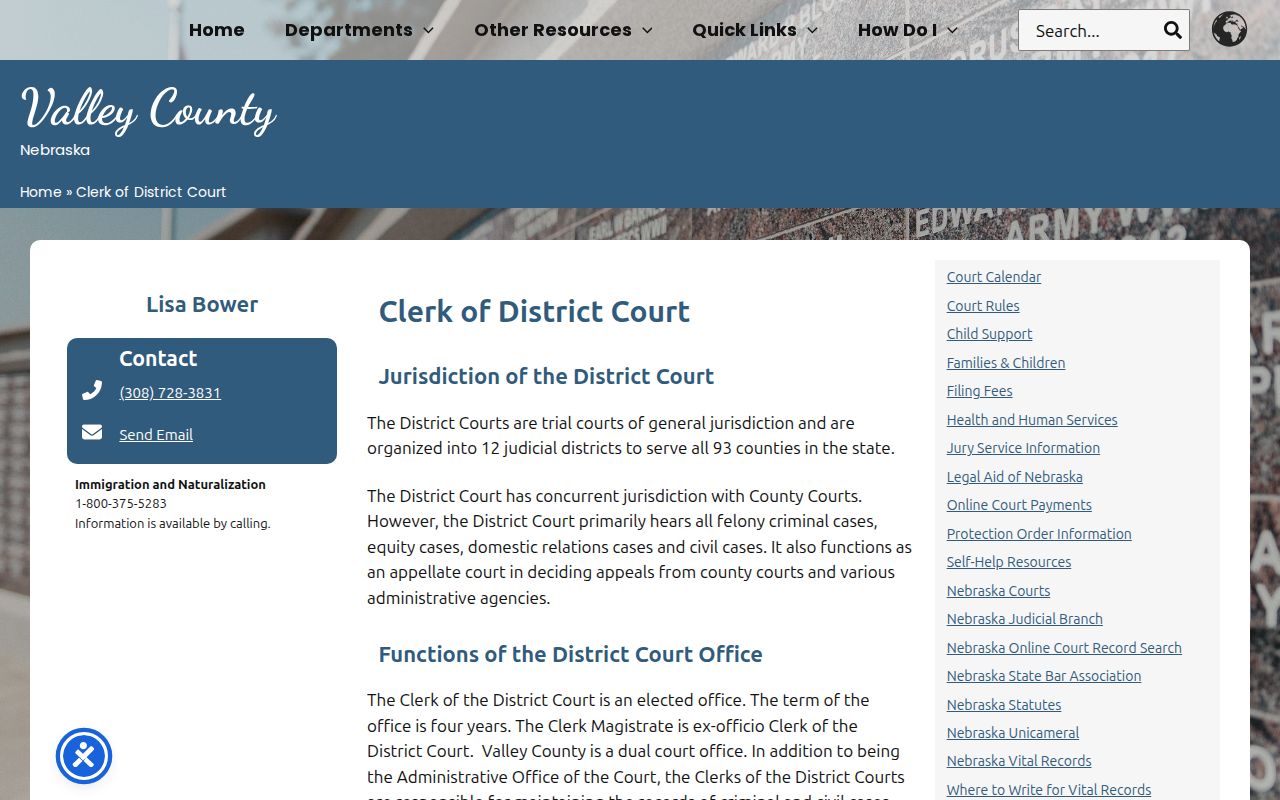
The clerk's page shows the District Court Clerk's routing for Ord, not any private case record.
Public Access to Ord Warrant Records
Address your request to the office that actually holds the record. In Ord, that means the city for a citation or a police report, County Court for a case file or warrant entry, and the Sheriff for a service return. Not sure who keeps it? Valley County's County Clerk can pass the request along. Nebraska § 84-712 then gives that office four business days after actual receipt to grant access, send an estimate, or issue a written denial, subject to the rules on extensive requests and exemptions.
Access note: Investigation, juvenile, and pre-execution search-warrant material may be withheld or redacted. Ask which record and legal rule applies.
Ord's City Clerk-to-Court Path
The Ord ordinance gives certain nonmoving fines ten days. If they stay unpaid, the City Clerk asks the City Attorney to file a complaint in the appropriate court. That is the route from local citation to county case. Late fines do not guarantee a warrant. County Court must confirm the actual record. Read the official Ord ordinance index for the city-source context. Keep the citation and ask for the county case number.
Ord Police Contact Hours
Ord Police lists office hours Monday through Thursday from 8:30 to 11:30 and 12:30 to 3:30, and Friday from 8:30 to 11:30 and 12:30 to 3:00. The office contact and dispatch contact differ. Neither one offers an online warrant lookup. There is no bond counter or warrant-clearing window. See the official source.
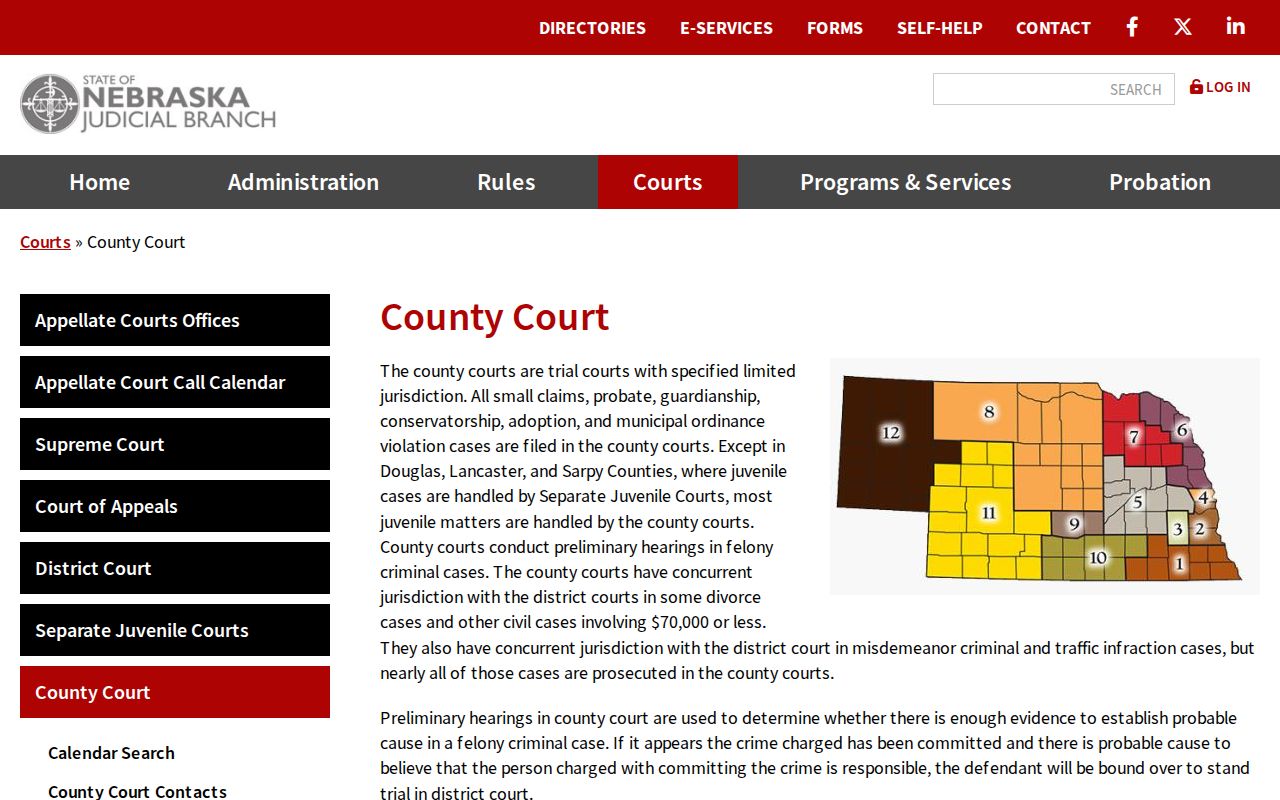
The county court page keeps the Ord focus on the office that confirms the formal case, not on private listings.
Why Ord Police Is Not a Warrant Search
The Ord site offers a public police contact, ordinance information, and an FAQ. It shows no live warrant form, active list, or most-wanted page. A records question can start there. A warrant question must move to Valley County Court. For service or custody, ask the Sheriff. That is the practical line between a local source and a court record.
Ten Days in the Ord Fine Rule
The ten-day language covers the city ordinance process in the official Ord material. It explains why a citation can move from a City Clerk file to a complaint in court. It does not establish the current balance. It sets no warrant or bond amount either. Ask the City Clerk and County Court for the live case path in Ord.
- City citation
- The local notice or violation record that may start with Ord.
- County case
- The formal court file where an FTA or nonpayment action can appear.
- Return
- The service or custody record that shows what happened after process reached an officer.
Confirming a Cleared Ord Warrant
Keep the receipt or signed order after any payment, hearing, reset, recall, or release in Ord. Ask County Court when the action is entered and how the Sheriff gets notice. Recheck both offices when timing matters. Nebraska ePayments takes no online bond. Valley County has posted no same-day clearance promise.
Call first: Ask the court what will happen before appearing at the courthouse or jail, especially if the case is felony, family-law, or unclear.